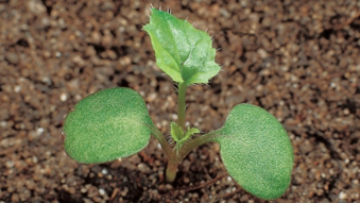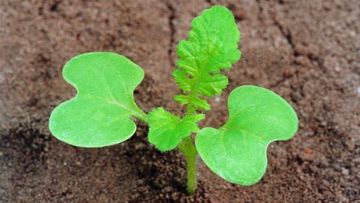
Charlock is a competitive weed, found across the country, particularly in soils with a high organic matter.
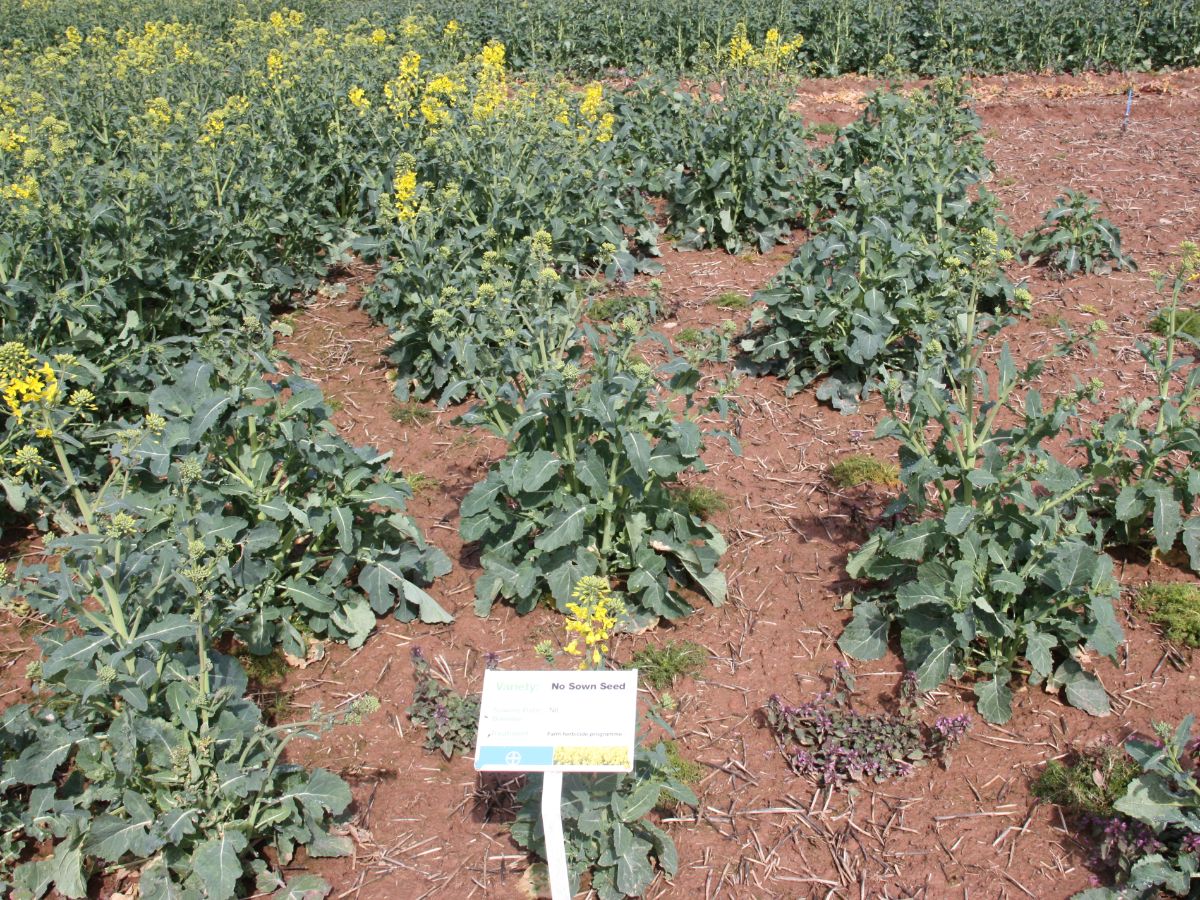
The Clearfield system is well known for delivering problem weed control including the difficult brassica weeds.
Growers also value Clearfield® for the control of volunteers, helping with achieving an optimum plant canopy, which is essential for maximising yields. In addition, with volunteers now identified as a major contributor to the erucic acid problem, their control means a purer oil sample at harvest, especially where high erucic acid rape (HEAR) or industrial rape on set-aside has been grown in the past.
Clearfield® has transformed the way we grow OSR, the performance is phenomenal.

Control of volunteers helps achieve an optimum plant canopy, which is essential for maximising yields.
With volunteers now identified as a major contributor to the erucic acid problem, their control means a purer oil sample at harvest, especially where high erucic acid rape (HEAR) or industrial rape on set-aside has been grown in the past.
It is important to manage volunteer OSR in the rotation. In cereal crops, volunteers can be controlled relatively effectively. However. the only way to control oilseed rape volunteers and many erucic acid producing weeds within the OSR crop is using the Clearfield® system.
Work carried out in 2018 by NIABTAG, funded by AHDB, has confirmed that volunteer oilseed rape, with high or elevated erucic acid levels, has been responsible for the high levels of erucic acid found in harvested samples (AHDB Project report No. 602).
The report concluded that over time, and because of the genetically dominant nature of the high erucic trait, the problem has been amplified and moved around the farm through the practice of farm saving conventional seed.
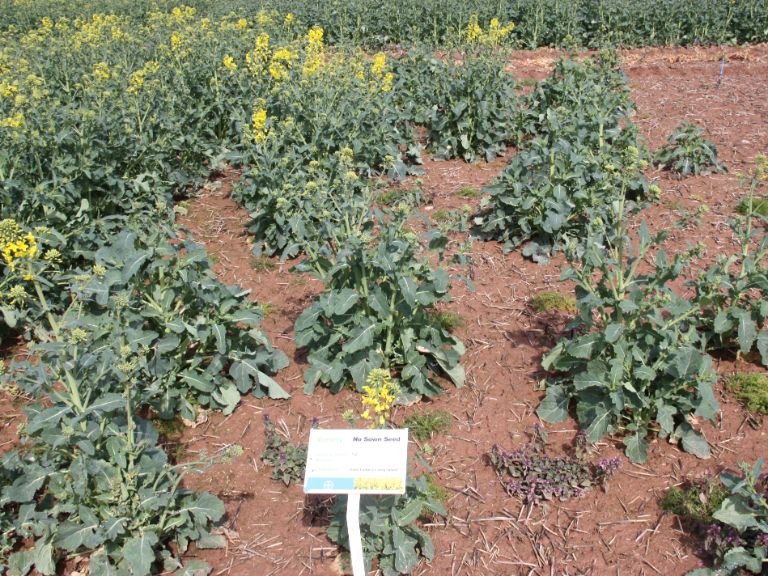
With weed and volunteer control identified as a key control point, Clearfield® is a unique tool to reduce the potential contamination arising from high populations of brassica weeds such as charlock, runch and hedge mustard, as well as volunteer oilseed rape.
Avoidance of volunteers by good husbandry and sowing certified seed that has been tested and confirmed to be <0.1% erucic acid can help to solve the problem but where erucic acid contamination arising from volunteers is a concern, or unknown, the Clearfield® system is a useful tool to eradicate the problem.
One single fully high erucic acid volunteer seed, at 50% erucic acid, in a sown population of 50 plants, has the potential to raise the erucic acid level in the harvested sample by 1%.
It is difficult to identify volunteers by eye but around flowering-time, they can be easier to spot, as they may have different plant types, heights or flowering dates.
| Clearfield removes potential sources | Erucic acid % |
| High Erucic Acid (HEAR) volunteer oilseed rape | 57.1 |
| Charlock (Sinapis arvensis) | 31.7 |
| Runch/Wild radish (Raphanus raphanistrum) | 26.7 |
| Hedge mustard (Sisymbrium officinale) | 20.9 |
Impact of Clearfield® production system on the quality of winter oilseed rape oil, Leaper D, J and Melloul, S 2010.
As grower confidence in the Clearfield® system has grown, so has the range of hybrids to choose from. There are 7 Clearfield® hybrids available for autumn 2023, with a range of growth habits, agronomic performance and yield potential.
Clearfield® hybrids are denoted by the CL suffix after the variety name. Further information on individual hybrids is available from the breeders.
| Variety | Recommended List 2023 | Breeder |
| InV1266 CL | BASF | |
| PT 279 CL | W/E Sp | Corteva |
| PX125 CL | Corteva | |
| DK Imprint CL | Y | Dekalb |
| Matrix CL | UK Sp | DSV |
| Beatrix CL | N Sp | DSV |
| LG Constructor CL | UK Sp | Limagrain |